Dawn of Domesticity
The earliest instances of what we can define as a "home" emerged not from blueprints, but from an intuitive response to environmental pressures. Before the standardization of materials, humans relied exclusively on vernacular architecture—building methods using locally available resources and traditions to address local needs.
The Mud-Brick Foundations
In the Neolithic settlement of Çatalhöyük (circa 7100 BC to 5700 BC) in modern-day Turkey, we observe one of the earliest examples of densely clustered residential architecture. Homes were constructed primarily from sun-dried mud bricks. Notably, these dwellings lacked ground-floor doors; inhabitants entered through openings in the roofs, navigating via ladders. This design offered both structural support for neighboring walls and defense against predators.
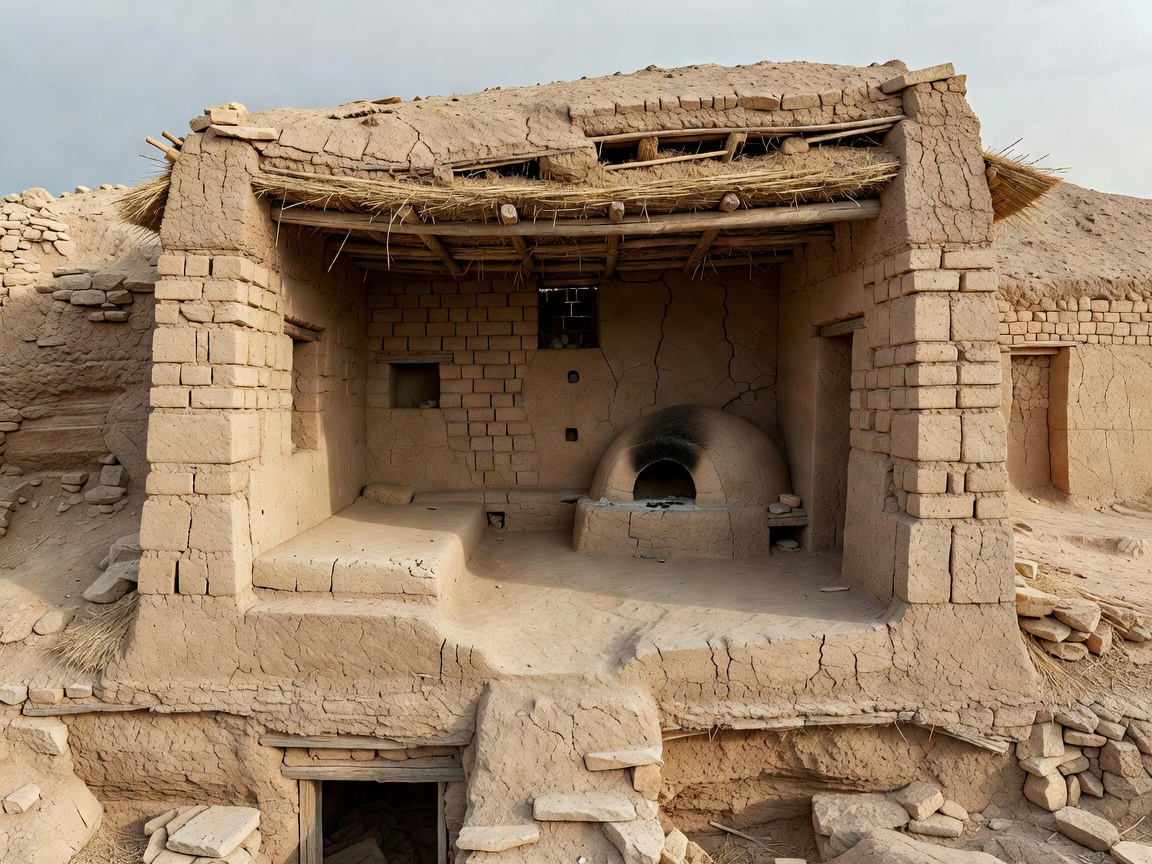
Organic Insulation
The thermal mass of mud-brick walls provided excellent temperature regulation, keeping interiors cool during the sweltering Anatolian summers and retaining hearth heat during winters.
Stone Shelters of the North
Contrasting the sun-baked plains of Anatolia, the Neolithic village of Skara Brae in Orkney, Scotland (circa 3180 BC), utilized flagstone. Due to the lack of timber, inhabitants constructed sophisticated dry-stone structures built into mounds of midden, which acted as primitive but highly effective insulation against harsh coastal winds.
Key Characteristics of Vernacular Shelters
| Material | Region | Primary Benefit |
|---|---|---|
| Adobe / Mud-brick | Middle East, Mesoamerica | High thermal mass; readily available. |
| Dry-stone | Northern Europe | Wind resistance; durability. |
| Timber and Thatch | Temperate Forests | Flexibility; rapid construction. |
The dawn of domesticity was characterized by a symbiotic relationship with the land. A home was not merely a structure on a plot, but an extension of the local geology and climate.