The Glass and Steel Revolution
In the aftermath of the early 20th century's global conflicts, architects sought a total break from the heavy ornamentation of the past. The Modernist movement viewed the home not as a fortress, but as a "machine for living in"—a concept famously championed by Swiss-French architect Le Corbusier.
1919: The Bauhaus
Walter Gropius founds the Bauhaus school in Weimar, integrating mass production aesthetics with fine art, laying the groundwork for modernist domestic design.
1929: Villa Savoye
Le Corbusier completes Villa Savoye in Poissy, France, embodying his "Five Points of Architecture" including pilotis (pillars), an open floor plan, and horizontal windows.
1951: Farnsworth House
Ludwig Mies van der Rohe completes this iconic one-room weekend retreat in Illinois. A singular glass box framed in white steel, dematerializing the boundary between interior and nature.
Deconstructing the Box
The introduction of structural steel frames meant that walls no longer needed to bear the weight of the roof. This technological leap liberated the floor plan. Traditional segmented rooms dissolved into continuous, flowing spaces. Architects like Frank Lloyd Wright had begun this process earlier with Prairie Style homes (such as the Robie House), but modernism pushed it to its absolute limits.
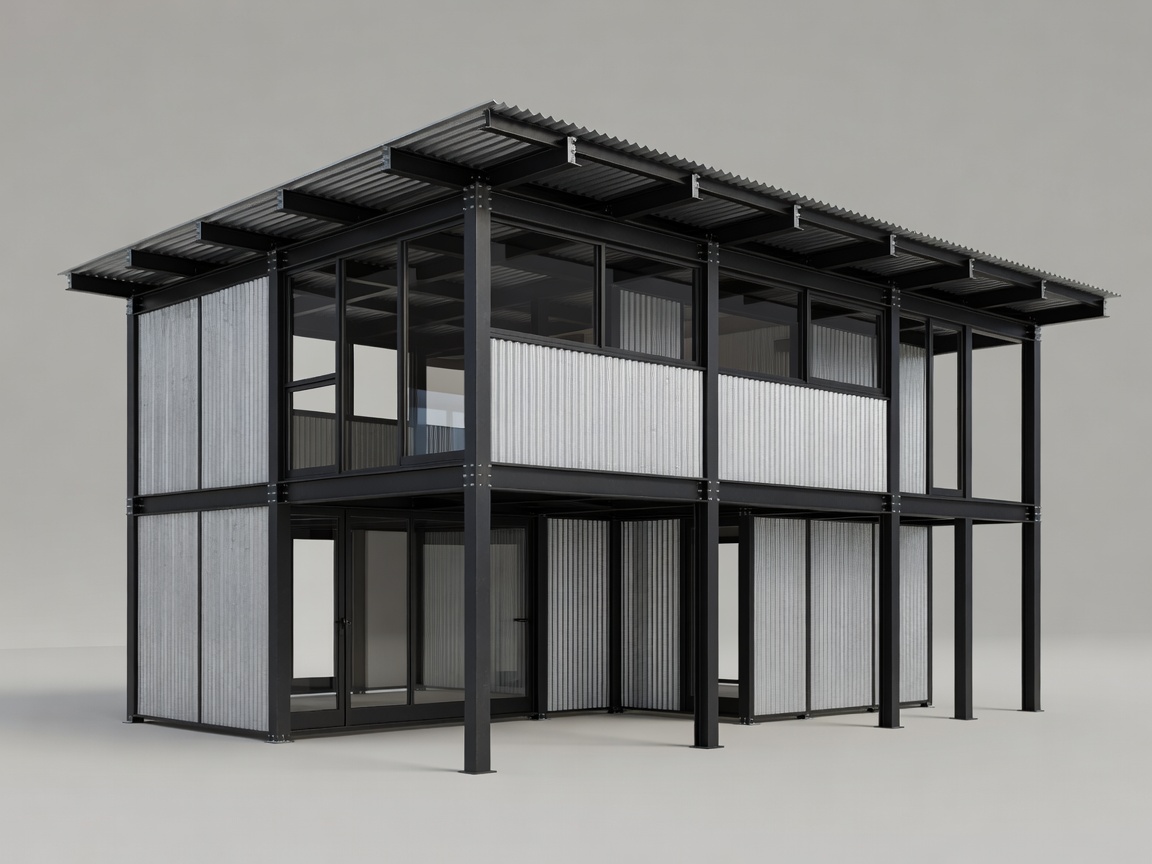
The Case Study Houses
Initiated in 1945 by Arts & Architecture magazine, this program commissioned major architects to design inexpensive, efficient model homes for the United States housing boom. The Eames House (Case Study House No. 8) famously utilized off-the-shelf industrial materials to create a vibrant, modular living space nestled into a hillside.
The Suburbs: Mass Producing the Dream
While high modernism was an intellectual pursuit, its influence trickled down to post-war mass housing. Developments like Levittown utilized assembly-line techniques applied to home construction, producing thousands of identical suburban homes. This era solidified the single-family detached home as the ultimate symbol of middle-class domesticity, although it also initiated profound critiques regarding suburban sprawl and isolation.